

A hailstorm can be over in minutes. The insurance claim that follows can take weeks, months, and occasionally even longer. That’s why understanding how to document hail damage for an insurance claim is one of the most important things a property owner can learn. Long before an insurance adjuster arrives, before contractors prepare estimates, and before a carrier makes a coverage decision, the documentation process has already started. Many homeowners assume that if hail caused damage, the insurance company will simply see it and pay for repairs.
Unfortunately, that’s not always how claims work. Insurance companies evaluate evidence. They review photographs, inspection findings, weather data, repair estimates, and supporting documentation. The quality of that evidence often influences how smoothly a claim moves through the process. I’ve seen situations where two neighboring homes experienced the exact same storm. One claim moved forward relatively quickly while another encountered delays, disagreements, and repeated inspections. The difference wasn’t necessarily the severity of the damage.
It was the documentation. If you’re researching hail claims before deciding whether professional assistance may be necessary, this guide will walk through exactly how to create a detailed record of damage, preserve evidence, and build a stronger claim file from the very beginning.
Why Documentation Matters More Than Most Homeowners Realize
Most people think documentation simply means taking a few photographs. It goes much deeper than that. Documentation creates a timeline. It establishes cause. It demonstrates severity. Most importantly, it helps transform observations into verifiable evidence. Insurance companies evaluate losses based on facts that can be supported. The more organized and complete your documentation becomes, the easier it is to demonstrate what happened and why repairs may be necessary.
Good documentation creates something valuable: certainty. In many ways, insurance claims revolve around proving what happened rather than simply describing what happened. This concept is similar to the philosophical field of epistemology, which examines how knowledge is established and verified. The stronger your evidence, the easier it becomes to demonstrate the cause, scope, and timing of hail damage during the claim review process.
Insurance Companies Pay Based on Evidence
Imagine two homeowners filing claims after the same hailstorm.
One says:
“My roof looks damaged.”
The other provides:
- Date-stamped photographs
- Weather reports
- Drone imagery
- Contractor inspection notes
- Videos of damaged areas
- Interior leak documentation
Which claim appears stronger?
The answer is obvious. Evidence creates clarity. The more documentation you preserve, the more information exists for claim reviewers to evaluate.
Common Reasons Hail Claims Become Underpaid
Many claim disputes can be traced back to documentation issues.
| Documentation Problem | Potential Result |
| Too few photos | Damage overlooked |
| Missing weather records | Storm causation questioned |
| Delayed reporting | Damage source disputed |
| Poor organization | Evidence ignored |
| Missing interior evidence | Incomplete settlement |
Most of these issues are avoidable with preparation and organization.
Step 1: Document the Storm Before Documenting the Damage
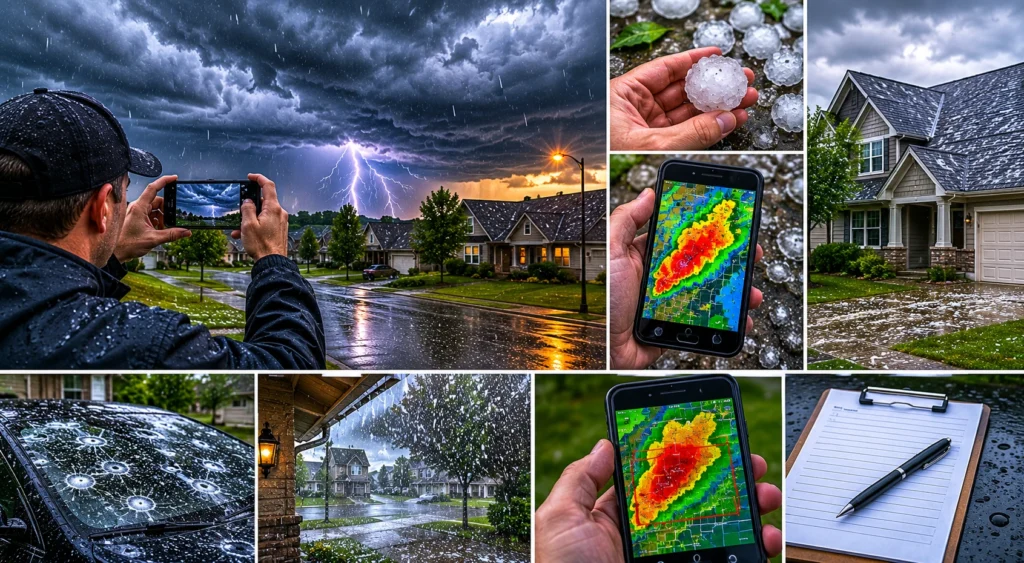
One of the biggest mistakes homeowners make is focusing exclusively on the property. Start with the storm itself. The storm becomes part of your evidence package.
Record the Date and Time
As soon as conditions are safe, write down:
- Date of the storm
- Approximate start time
- Approximate end time
- Hail size estimates
- Wind conditions
- Any visible property impacts
These notes may seem minor today. Months later, they can become extremely valuable. Human memory fades quickly. Written records don’t.
Save Weather Reports
Weather data provides independent verification that severe weather occurred.
Useful sources include:
- National Weather Service reports
- Local weather station reports
- Radar imagery
- Emergency weather alerts
- Hail-tracking databases
Save screenshots. Download reports. Store everything in multiple locations. Having objective weather data often strengthens the overall claim file.
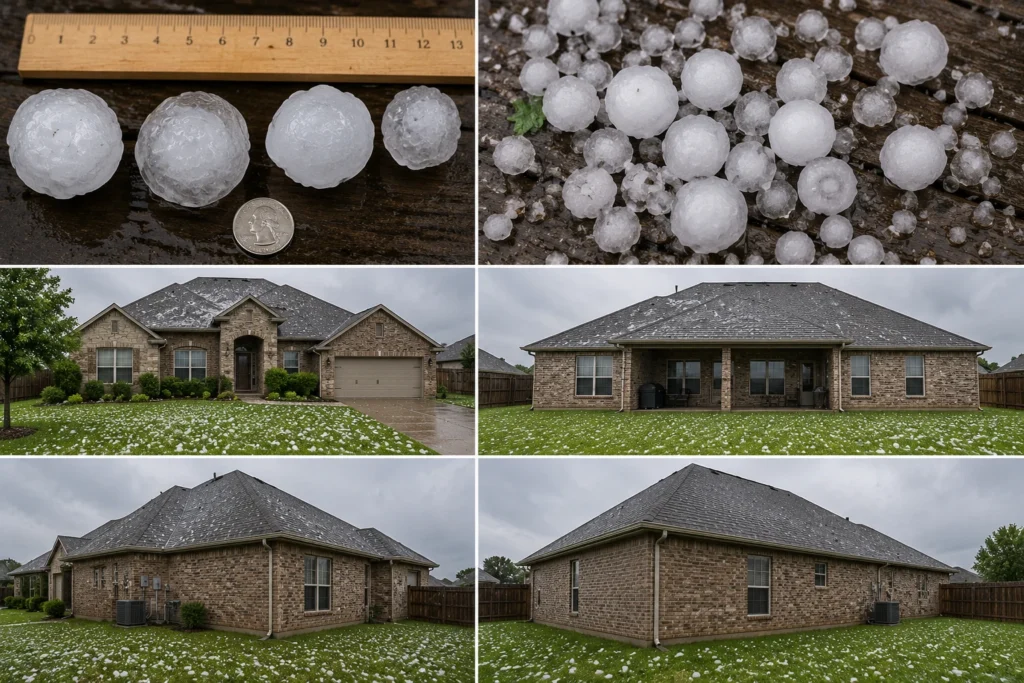
Photograph the Hailstones
If hail remains visible after the storm, document it immediately.
Take photographs that include:
- A ruler
- Coins for scale
- Multiple viewing angles
- Groups of hailstones
Hail size matters. The larger the hailstones, the greater the likelihood of significant impacts to roofing materials, gutters, HVAC systems, and other property components.
Step 2: Start With Wide-Angle Property Photos
Many people immediately zoom in on individual dents or roof impacts. Don’t do that first. Start wide. Very wide.
Capture the Entire Property
Photograph:
- Front elevation
- Rear elevation
- Left side
- Right side
- Roof overview
- Detached structures
- Fencing
- Landscaping
Think of these images as establishing the scene. They provide context for every close-up photograph that follows.
Why Context Matters
Adjusters rarely evaluate damage in isolation. They evaluate the property as a whole.
Wide-angle photographs help demonstrate:
- Overall storm impact
- Property condition
- Damage distribution
- Areas affected by the storm
Context often makes individual damage photographs more persuasive.
Step 3: Photograph Roof Damage Like a Professional Inspector
The roof is frequently the largest component of a hail claim. It’s also where some of the most important evidence can be found.
Asphalt Shingle Hail Damage
Common indicators include:
- Circular bruising
- Granule loss
- Dark impact marks
- Exposed reinforcement material
When photographing shingles:
- Take overview photos
- Take medium-range photos
- Take close-up photos
- Photograph multiple roof slopes
Patterns matter.
A single damaged shingle may not tell much of a story. Dozens of impacts across multiple slopes often tell a very different story.
Metal Roof Damage
Metal roofing systems typically show damage differently.
Look for:
- Dents
- Surface depressions
- Coating damage
- Paint fractures
Photograph these impacts from different angles and under different lighting conditions. Certain dents become much more visible when sunlight strikes the roof at an angle.
Tile and Slate Roofing
Tile and slate systems often exhibit:
- Chips
- Cracks
- Fractures
- Broken edges
Document both the individual damage and the surrounding area. Showing broader impact patterns often helps establish storm-related causation.
Safety First
Never climb onto a roof if conditions are unsafe.
Avoid roof access if:
- Surfaces are wet
- The roof is steep
- Structural damage is suspected
- Proper safety equipment is unavailable
Alternative options include:
- Drone photography
- Binocular inspections
- Professional inspections
No photograph is worth an injury.
Step 4: Document Every Exterior Surface
Many homeowners focus entirely on roofing materials. That approach leaves valuable evidence behind. Hail often affects numerous exterior components.
Gutters and Downspouts
Metal gutters frequently preserve some of the clearest evidence available.
Document:
- Dents
- Surface impacts
- Paint damage
- Deformation
These components often help confirm storm severity.
Siding
Inspect all exterior wall surfaces.
Photograph:
- Cracks
- Chips
- Fractures
- Dents
- Surface impacts
Different materials react differently to hail. What appears insignificant at first glance may become important later.
Garage Doors
Garage doors often serve as excellent indicators of hail activity because large flat metal surfaces make impacts easier to identify.
Photograph:
- Individual dents
- Entire panels
- Multiple affected areas
Patterns of damage frequently provide useful supporting evidence.
Windows and Screens
Inspect carefully for:
- Cracked glass
- Torn screens
- Broken seals
- Damaged trim
Even relatively minor impacts deserve documentation. Small losses can contribute to the overall claim value.
Step 5: Don’t Forget HVAC Equipment
HVAC systems are frequently overlooked after hailstorms. That’s unfortunate because they often contain some of the clearest impact evidence on the property.
Why HVAC Documentation Matters
Outdoor condensing units contain:
- Thin aluminum fins
- Metal panels
- Protective grilles
These surfaces often show hail impacts clearly.
Photograph:
- Overall unit condition
- Damaged fins
- Dented panels
- Impact marks
The condition of HVAC equipment can help support broader storm damage findings elsewhere on the property.
Other Equipment Worth Inspecting
Don’t stop with HVAC systems.
Also document:
- Solar panels
- Satellite dishes
- Outdoor kitchens
- Patio furniture
- Pool equipment
- Storage sheds
Every damaged component contributes to a more complete record of the storm.
Step 6: Look Inside the Property
Exterior damage tells only part of the story. Interior damage can be equally important. Sometimes more important.
Watch for Water Intrusion
Inspect:
- Ceilings
- Attics
- Walls
- Closets
- Skylight areas
Photograph:
- Water stains
- Damp drywall
- Wet insulation
- Active leaks
Document conditions immediately and continue documenting if damage progresses.
Step 7: Take Videos in Addition to Photos
Photos freeze moments. Videos provide context.
The strongest claim files often contain both.
Video allows you to:
- Demonstrate scale
- Show property layout
- Capture damage patterns
- Create a visual timeline
A slow walkthrough of the property often communicates details that dozens of individual photographs may miss.
Best Practices for Video Documentation
Keep videos:
- Slow
- Steady
- Organized
- Narrated
Mention:
- Date of recording
- Area being inspected
- Observed damage
Clear narration adds credibility and helps create a useful record.
Step 8: Create a Detailed Damage Inventory
By now, you’ll likely have dozens or even hundreds of photographs. It’s time to organize. Create a simple damage inventory.
| Property Area | Damage Observed | Severity |
| Roof | Hail impacts | Severe |
| Gutters | Denting | Moderate |
| HVAC Unit | Fin damage | Moderate |
| Screens | Tears | Minor |
| Ceiling | Water stains | Moderate |
A damage inventory serves as a roadmap for everyone reviewing the claim. Adjusters appreciate organization. Contractors appreciate organization. Property owners benefit from organization most of all.
Step 9: Save Every Receipt and Expense
After a hailstorm, homeowners often focus entirely on visible damage. That’s understandable. But documenting costs is just as important as documenting impacts. Many insurance policies require property owners to take reasonable steps to prevent additional damage after a loss. Those efforts often involve expenses that may become part of the claim.
Emergency Mitigation Costs
Keep records for:
- Roof tarping
- Temporary repairs
- Water extraction
- Emergency contractor visits
- Debris removal
- Temporary weatherproofing
Don’t rely solely on bank statements.
Save:
- Invoices
- Receipts
- Work orders
- Credit card confirmations
- Contractor estimates
Create digital backups immediately. Paper records tend to disappear when they’re needed most.
Why These Expenses Matter
Insurance carriers generally expect homeowners to protect their property after a storm. For example, if hail damages a roof and additional rain enters the structure days later, an insurer may ask what steps were taken to reduce further damage. Documentation answers that question. It demonstrates responsible action and may support reimbursement for mitigation costs.
Step 10: Organize Your Claim File Like an Adjuster Would
At some point, documentation becomes overwhelming. Hundreds of photos. Multiple reports. Videos. Weather data. Receipts. Emails. Without organization, valuable evidence can become difficult to locate.
Create a Logical Folder Structure
Consider creating folders such as:
Storm Documentation
- Weather reports
- Radar images
- Hailstone photos
Roof Damage
- Overview photographs
- Close-up photographs
- Drone imagery
Exterior Damage
- Gutters
- Siding
- Garage doors
- Windows
Interior Damage
- Water stains
- Ceiling damage
- Attic photographs
Communications
- Emails
- Letters
- Inspection notes
Expenses
- Receipts
- Invoices
- Temporary repairs
Organization saves time and reduces confusion.
Name Files Properly
Avoid names such as:
- IMG001.jpg
- Photo12.jpg
- NewImage.jpg
Use descriptive names instead:
- Roof_South_Slope_Hail_Damage_01.jpg
- HVAC_Dent_Panel_02.jpg
- Ceiling_Water_Stain_03.jpg
Small organizational habits often make a significant difference later.
What Insurance Adjusters Actually Look For During a Hail Claim
Many homeowners wonder what happens once an adjuster arrives. The answer is simple. They’re looking for evidence. But they’re also looking for consistency.
Consistent Impact Patterns
Legitimate hail events generally affect multiple surfaces.
Adjusters commonly inspect:
- Roofing materials
- Gutters
- Downspouts
- HVAC equipment
- Window screens
- Metal components
The goal is to determine whether the evidence across the property supports a hail-related loss.
Functional Versus Cosmetic Damage
This distinction frequently appears in hail claims. Functional damage affects performance.
Examples include:
- Roof punctures
- Broken tiles
- Water intrusion
- Damaged flashing
Cosmetic damage affects appearance but may not affect performance.
Examples include:
- Minor dents
- Surface blemishes
- Small paint imperfections
Insurance policies sometimes address these categories differently. Understanding the distinction helps homeowners better understand claim discussions.
Evidence Supporting Replacement
When replacement is being considered, adjusters may evaluate:
- Repairability
- Damage distribution
- Material availability
- Matching concerns
- Building code requirements
Strong documentation can help demonstrate the full extent of storm-related impacts.
Common Documentation Mistakes That Cost Homeowners Money
The difference between a smooth claim and a frustrating one often comes down to avoidable mistakes.
Taking Too Few Photos
Take more photographs than you think you need. You can always ignore extra photographs later. You cannot recreate evidence that was never documented.
Waiting Too Long
Time works against evidence. Rain washes away indicators. Repairs alter conditions. Weather changes surfaces. Photograph damage as soon as it is safe.
Ignoring Minor Damage
Small dents matter. Minor impacts matter.Even seemingly insignificant damage can help support larger findings elsewhere on the property. Every piece of evidence contributes to the overall story.
Throwing Away Damaged Materials
Whenever practical, preserve damaged materials.
Examples include:
- Broken shingles
- Cracked tiles
- Damaged screens
- Bent vents
Physical evidence can sometimes become extremely valuable during claim review.
Failing to Document Communications
Insurance claims generate a significant amount of communication. Without records, misunderstandings become more likely. Document everything.
How to Document Communication With the Insurance Company
A strong claim file contains more than photographs. It contains a history of the claim.
Create a Claim Activity Log
Track every interaction.
| Date | Contact | Discussion |
| June 10 | Claims Representative | Claim opened |
| June 15 | Field Adjuster | Inspection scheduled |
| June 22 | Examiner | Estimate discussion |
A simple log can provide clarity throughout the claim process.
Save Every Email
Create a dedicated folder for:
- Emails
- Letters
- Inspection notices
- Claim updates
- Settlement information
Having immediate access to communications reduces confusion and improves organization.
Document Phone Calls
After important calls, record:
- Date
- Time
- Representative’s name
- Main discussion points
Memories fade quickly. Written records remain useful.
Special Documentation Tips for Commercial Property Owners
Commercial hail claims often involve larger financial stakes and greater complexity.
Additional Evidence Commercial Claims Require
Commercial property owners should consider documenting:
- Roof inspection reports
- Maintenance records
- Leak reports
- Tenant complaints
- Operational disruptions
The larger the property, the more important detailed organization becomes.
Tenant Impact Records
For multi-tenant properties, documentation may include:
- Water intrusion complaints
- Damaged inventory
- Temporary relocations
- Business interruption concerns
These records may become relevant when evaluating the full scope of a loss.
What to Do if the Insurance Adjuster Misses Damage
No inspection process is perfect. Occasionally, damage may be overlooked.
Request a Reinspection
If important damage appears to have been missed:
- Gather supporting photographs
- Obtain contractor findings
- Organize evidence clearly
- Request additional review
Professional, organized communication generally produces better results than emotional reactions.
Compare Inspection Findings
Review:
- Contractor reports
- Insurance estimates
- Scope sheets
- Inspection photographs
Differences often reveal overlooked items.
Document Supplemental Damage
Additional damage sometimes becomes visible after repairs begin.
When that happens:
- Photograph immediately
- Preserve damaged materials
- Obtain supporting documentation
- Notify appropriate parties
Supplemental claims frequently depend on documentation quality.
When Documentation Alone May Not Be Enough
Documentation is powerful. But some claims still become disputed.
Warning Signs of a Developing Dispute
Potential indicators include:
- Partial denials
- Coverage disagreements
- Low settlement offers
- Missing repair items
- Significant estimate differences
When disputes arise, documentation becomes even more important.
Evidence Creates Negotiation Leverage
Facts matter. Photographs matter. Reports matter. Organized evidence transforms opinions into documented facts. That can be extremely valuable when disagreements occur.
How Homeowners in Cameron Can Strengthen Their Hail Damage Claim
Property owners in Cameron face weather events capable of producing significant hail damage in a very short period of time. The key is acting quickly. Delaying inspections or documentation creates unnecessary risk.
A stronger approach includes:
- Photographing damage immediately
- Saving weather reports
- Obtaining professional inspections
- Organizing records from the beginning
The sooner evidence is preserved, the more reliable it generally becomes.
Why Many Property Owners in Cameron Wait Too Long to Document Damage
One of the most common mistakes after a hailstorm is assuming serious damage would be obvious immediately. Unfortunately, that’s not always true.
Some damage remains hidden until:
- Water intrusion develops
- Roofing materials deteriorate
- Ceiling stains appear
- Repairs become necessary
By then, important evidence may be more difficult to document. Property owners in Cameron often benefit from conducting inspections soon after severe weather, even when visible damage initially appears limited.
What Homeowners in Cameron Should Do Within the First 48 Hours After a Hailstorm
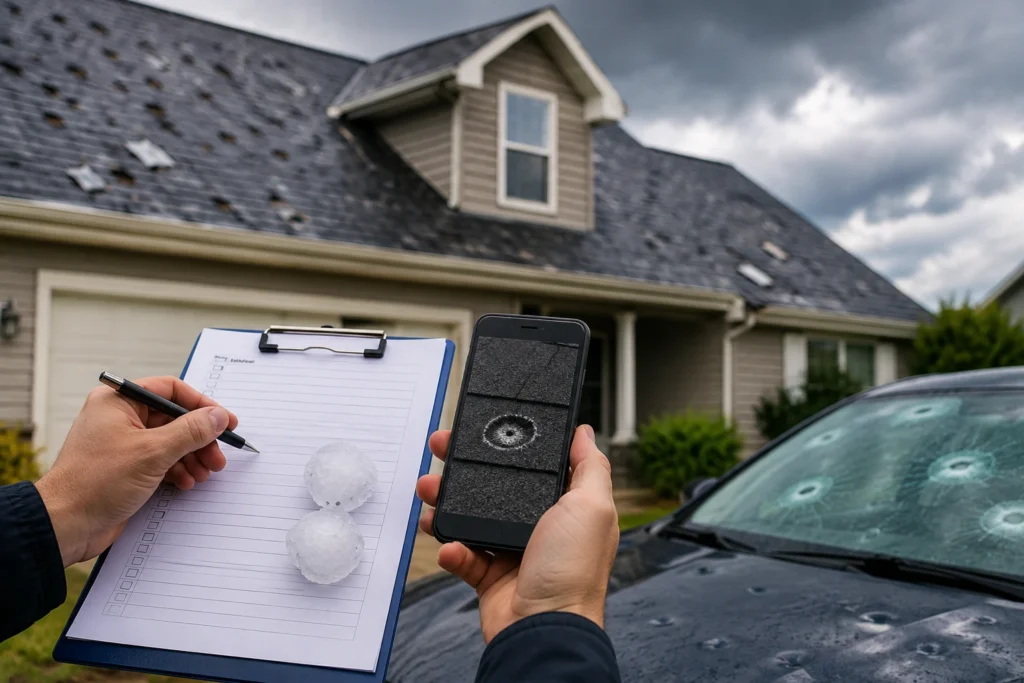
The first two days after a storm are often critical. Early documentation helps preserve evidence before conditions change.
Hail Damage Roof Insurance Claim: How to Protect Your Roof
One of the most important lessons property owners learn after a severe storm is that quick action matters. When dealing with a Hail Damage Roof Insurance Claim: How to Protect Your Roof, the best approach is to document conditions immediately, prevent additional damage when safe to do so, and preserve all evidence before repairs begin. Taking photographs, saving weather reports, and maintaining organized records can help demonstrate the full extent of the loss and support a smoother claims process.
First 48-Hour Checklist
✓ Photograph hailstones
✓ Save weather reports
✓ Capture wide-angle property photos
✓ Document roof damage
✓ Inspect gutters and siding
✓ Photograph HVAC equipment
✓ Check interior spaces
✓ Save receipts
✓ Begin a communication log
✓ Back up digital files
Homeowners in Cameron who take these steps early often place themselves in a stronger position when filing and supporting an insurance claim.
Final Hail Damage Documentation Checklist
Before submitting a claim, make sure you have:
- Weather reports
- Storm timeline
- Hailstone photographs
- Roof photographs
- Exterior damage photographs
- Interior damage photographs
- Video walkthroughs
- Inspection reports
- Damage inventory lists
- Expense receipts
- Communication logs
- Backup copies of all records
Think of your claim file as a story. Every photograph, receipt, report, and note helps tell that story. The more complete the story becomes, the easier it is for others to understand exactly what happened.
Conclusion
Learning how to document hail damage for an insurance claim is one of the smartest things a property owner can do after severe weather strikes. The process itself isn’t complicated. It simply requires attention to detail and consistency. Strong documentation begins with weather reports and photographs. It continues through inspections, videos, receipts, communication logs, and organized claim files. Together, these elements create a detailed record of the loss and help support the claim throughout the review process.
Most claim challenges aren’t caused by a lack of damage. They’re caused by a lack of evidence. That’s why property owners who take documentation seriously often place themselves in a stronger position throughout the claims process. Whether you’re dealing with minor hail impacts or widespread storm damage, thorough documentation protects more than the claim itself. It protects your ability to demonstrate what happened, when it happened, and why repairs may be necessary. When it comes to how to document hail damage for an insurance claim, preparation isn’t just helpful. It can make all the difference.
FAQs
Start by recording the storm date, taking photos of hailstones, and saving weather reports before documenting property damage.
Take as many clear photos as possible from multiple angles, including wide shots and close-ups of all damaged areas.
Yes. Water stains, leaks, and other interior damage can help demonstrate how the hailstorm affected the property.
Only if it is safe to do so. If conditions are hazardous, use a drone, binoculars, or a professional inspection.
Weather reports provide independent evidence that a hail event occurred in your area during the reported timeframe.
Yes. Receipts for tarping, emergency repairs, and mitigation work may support reimbursement requests.
Document the new damage immediately and notify the insurance company as soon as possible.
Absolutely. Hail can damage gutters, siding, windows, HVAC units, screens, and other exterior components.
Gather supporting evidence, obtain professional inspection findings, and request a reinspection if necessary.
Keep all documentation until repairs are completed and the claim is fully resolved, and consider retaining copies for future reference.