
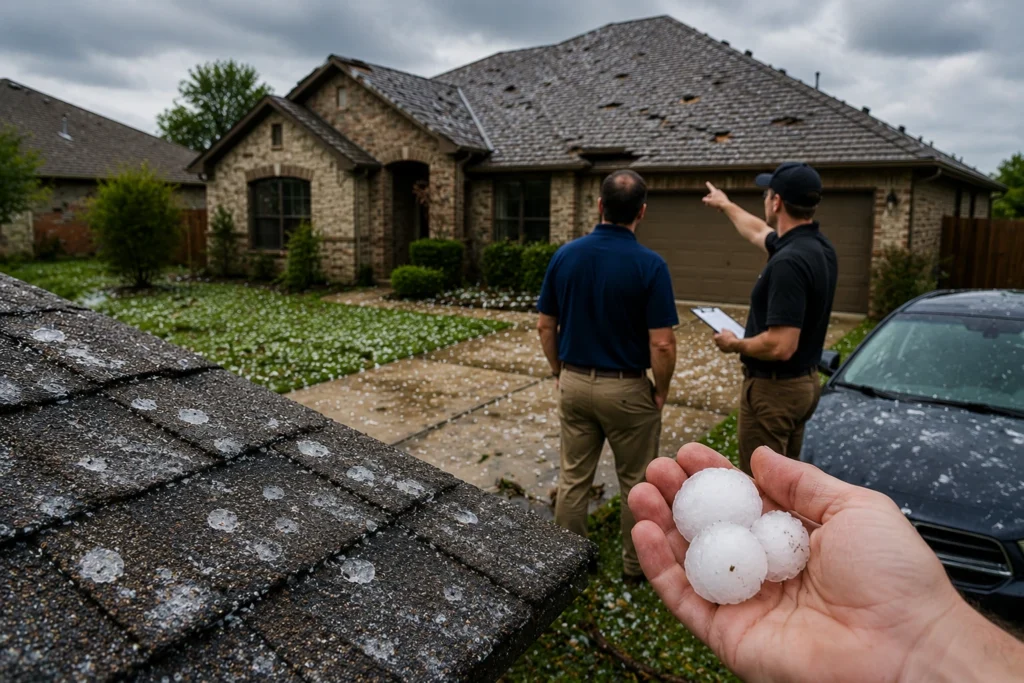
When a severe hailstorm strikes, most property owners immediately think about repairs. The roof. The gutters. The siding. Maybe even interior leaks. However, another decision can have just as much impact on the outcome of your claim: understanding the difference between a Public Adjuster vs. Insurance Adjuster for Hail Claims in Cameron, TX. Many homeowners assume all adjusters work for the same purpose.
They don’t. In reality, these professionals serve very different roles during the insurance claim process. One represents the insurance company. The other represents the policyholder. That distinction matters. A lot. The difference can affect inspections, documentation, negotiations, and ultimately the amount paid under a hail damage claim. Whether you own a home, rental property, commercial building, or agricultural structure, understanding these roles can help you make better decisions after a storm. Let’s break down exactly what each professional does and how those differences can influence the outcome of your hail claim.
Understanding Hail Damage Claims in Cameron, TX
Texas consistently ranks among the states most affected by hailstorms. Large hailstones can damage roofing materials, crack siding, dent metal surfaces, damage HVAC equipment, and create water intrusion risks that may not appear until weeks later. The challenge is that hail damage isn’t always obvious.
A few dents on gutters may be easy to spot. Bruised shingles, damaged flashing, compromised underlayment, and weakened roof components often require closer inspection. That is why the insurance claim process can become more complicated than many property owners expect.
Most hail claims follow a similar process:
- Damage occurs
- Property owner files a claim
- Inspection is scheduled
- Damage is evaluated
- Estimates are prepared
- Settlement decisions are made
- Repairs begin
Simple in theory. Sometimes messy in practice. Differences in inspections, documentation, and claim interpretation can lead to very different outcomes.
Why Hail Damage Claims Often Become Disputed
Not every dispute involves bad intentions. Many stem from genuine disagreements regarding the extent of damage. Consider this example. A homeowner believes the roof requires replacement. An insurance carrier determines repairs are sufficient. Both parties may honestly believe they are correct. The disagreement often comes down to evidence.
Questions frequently include:
- Is the damage truly hail-related?
- Is the damage cosmetic or functional?
- Are building code upgrades required?
- Were all affected components included?
- Are repairs sufficient or is replacement necessary?
The answers to these questions can significantly affect claim values. That’s where adjusters become central to the process.
What Is an Insurance Adjuster?
An insurance adjuster evaluates claims on behalf of an insurance company. Their responsibility is to investigate losses, review policy provisions, inspect damage, and determine what the carrier believes is covered under the policy. Insurance adjusters are an essential part of the insurance industry. Without them, carriers would struggle to process the large volume of claims generated after major weather events.
Types of Insurance Adjusters
There are generally two primary categories.
Staff Adjusters
Staff adjusters work directly for insurance companies. They receive salaries and benefits from the carrier and handle claims assigned by their employer.
Independent Adjusters
Independent adjusters are contracted by insurance companies. These professionals often assist carriers during periods of high claim volume, particularly after major storms. Although they may not be direct employees, they still represent the insurance company that hired them.
What Insurance Adjusters Do During Hail Claims
Their responsibilities typically include:
- Inspecting damaged property
- Photographing visible damage
- Reviewing policy coverage
- Preparing repair estimates
- Determining claim value
- Recommending settlement amounts
Many insurance adjusters perform their jobs professionally and diligently. However, they often operate under significant workload pressures after large hail events. That reality can influence the inspection process.
Advantages of Insurance Adjusters
Insurance adjusters offer several benefits to policyholders.
No Additional Cost
The insurance company pays the adjuster. Property owners do not typically incur separate fees for the carrier’s inspection.
Familiarity With Carrier Procedures
Insurance adjusters understand the carrier’s systems, documentation requirements, and internal processes. This can help claims move efficiently.
Fast Deployment Following Storms
After hailstorms, insurance companies often mobilize large teams of adjusters quickly. Prompt inspections can accelerate claim handling.
Direct Access to Claim Systems
Insurance adjusters can immediately enter findings, estimates, and documentation into carrier systems. This often streamlines administrative processing.
Potential Limitations of Insurance Adjusters
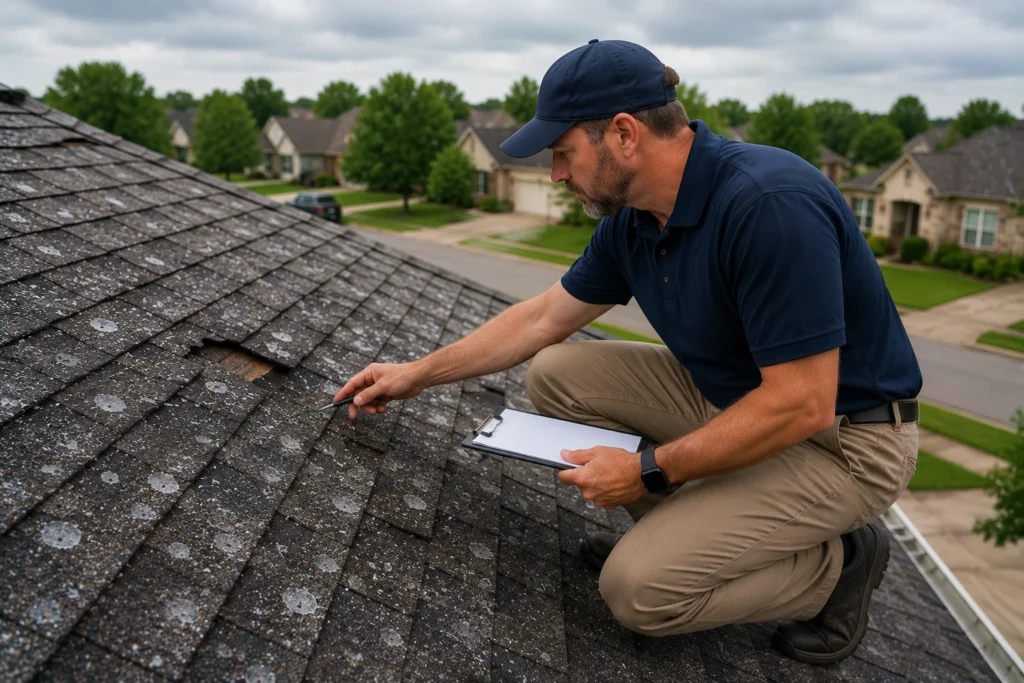
While insurance adjusters provide valuable services, property owners should also understand potential limitations.
High Claim Volume
Major hailstorms can generate thousands of claims within days. Adjusters may inspect multiple properties each day. That workload can sometimes limit the amount of time spent on each inspection.
Limited Inspection Scope
Not every inspection is equally detailed. Some damage requires extensive evaluation to identify. Complex roofing systems, multiple structures, and hidden damage may require additional attention.
Missed Damage
This issue is not unique to insurance adjusters. Any inspection can overlook damage. However, when inspections are conducted quickly following widespread storms, some affected components may not receive the same level of scrutiny.
Commonly missed items may include:
- Flashing
- Ridge materials
- Ventilation systems
- Underlayment
- Soft metal impacts
- Code-related upgrades
These omissions can affect claim value.
What Is a Public Adjuster?
A public adjuster serves a completely different role. Unlike insurance adjusters, public adjusters work exclusively for policyholders. They do not represent insurance companies. They represent property owners. This distinction is the foundation of the Public Adjuster vs. Insurance Adjuster for Hail Claims in Cameron, TX discussion. Everything else stems from that difference.
What Public Adjusters Do
Public adjusters assist policyholders throughout the claim process.
Their services often include:
- Policy review
- Property inspections
- Damage documentation
- Estimate preparation
- Claim management
- Settlement negotiations
- Supplemental claim preparation
Rather than focusing solely on evaluation, public adjusters often act as claim advocates. Their goal is ensuring all covered damages are properly identified, documented, and considered during settlement discussions.
Why Property Owners Hire Public Adjusters
Insurance policies can be lengthy. Construction estimates can be complicated. Storm damage evaluations often involve technical details that many property owners encounter only once or twice in their lives. Public adjusters help bridge that gap. They provide expertise, documentation support, and claim representation when disputes or questions arise.
Advantages of Public Adjusters
Detailed Property Inspections
Many public adjusters perform highly detailed inspections.
Their evaluations often include:
- Roof systems
- Gutters
- Flashing
- Skylights
- HVAC equipment
- Siding
- Windows
- Interior water damage
Their objective is identifying every covered item affected by the storm.
Strong Documentation
Documentation is frequently the deciding factor in claim disputes. Successful claims rely on evidence. Not assumptions. Not opinions. Evidence.
The strongest claim files may include:
- Photographs
- Drone imagery
- Measurements
- Contractor reports
- Weather data
- Repair estimates
Strong documentation supports stronger negotiations.
Weak documentation creates uncertainty. Interestingly, this concept mirrors the academic field of Epistemology, which examines how knowledge is established and validated. In insurance claims, evidence serves a similar purpose by helping establish what damage exists and what repairs may be necessary.
Claim Advocacy
Public adjusters actively advocate for policyholders.
That can be particularly valuable when disagreements arise regarding:
- Scope of repairs
- Pricing
- Replacement requirements
- Building code issues
- Coverage interpretation
Their role is not simply to inspect damage. Their role is to represent the policyholder’s interests throughout the process.
Potential Drawbacks of Public Adjusters
Public adjusters are not necessary for every claim. Property owners should understand both the advantages and limitations.
Contingency Fees
Most public adjusters work on contingency. Their compensation is typically based on a percentage of the claim recovery. For smaller claims, the financial benefit may not justify the fee.
Not Every Claim Requires Representation
Some hail claims are straightforward. Damage is obvious. Coverage is clear. Settlement is fair. In those situations, additional representation may not provide significant value.
Experience Matters
Not all public adjusters have equal experience. Choosing a qualified professional with storm claim expertise is essential.
Public Adjuster vs. Insurance Adjuster for Hail Claims in Cameron, TX
Now let’s compare the two roles directly.
Side-by-Side Comparison
| Factor | Insurance Adjuster | Public Adjuster |
| Represents | Insurance Company | Policyholder |
| Primary Objective | Evaluate Claim | Maximize Covered Recovery |
| Cost to Property Owner | No Direct Fee | Typically Contingency Fee |
| Inspection Scope | Varies | Often Extensive |
| Negotiation Role | Limited | Active Advocate |
| Claim Management | Partial | Comprehensive |
| Documentation Focus | Carrier Evaluation | Policyholder Support |
| Settlement Perspective | Insurance Company | Property Owner |
This table highlights the central issue. Neither professional serves the same client. Understanding that distinction helps property owners make informed decisions after a hailstorm.
Key Differences That Can Affect Claim Outcomes
Representation Matters
The biggest difference is loyalty. Insurance adjusters represent the carrier. Public adjusters represent the policyholder. That distinction affects recommendations, inspections, and negotiations throughout the claim process.
Inspection Depth
Inspection thoroughness can significantly affect outcomes. More time spent inspecting often leads to more detailed findings. Detailed findings often result in more comprehensive repair scopes.
Documentation Quality
The quality of evidence matters. A great deal. Property owners who maintain organized records generally place themselves in a stronger position during claim evaluations.
This includes:
- Damage photographs
- Weather reports
- Contractor assessments
- Repair estimates
- Communication records
Negotiation Authority
Insurance adjusters generally evaluate claims. Public adjusters actively negotiate claims. This difference often becomes important when disputes emerge regarding repair costs or settlement amounts.
How Hail Claims Are Evaluated
Understanding how hail damage is assessed helps explain why claim outcomes can vary.
Exterior Inspection Areas
Inspectors often evaluate:
- Roofing materials
- Gutters
- Downspouts
- Flashing
- Siding
- Window frames
- Exterior equipment
They look for indicators such as:
- Impact marks
- Fractures
- Dents
- Granule loss
- Material displacement
However, identifying damage is only part of the process. Determining whether that damage warrants repair or replacement introduces additional considerations.
Interior Damage Evaluation
A proper hail claim should not stop at the roof. Interior damage can reveal issues that are not immediately visible from outside the structure.
Inspectors often evaluate:
- Ceiling stains
- Water intrusion
- Damaged insulation
- Drywall deterioration
- Mold growth
- Flooring damage
Sometimes the first sign of roof damage appears weeks after the storm. A small leak may not become visible until the next rainfall event. This is why ongoing monitoring after a hailstorm is so important.
Hidden Damage That Is Frequently Overlooked
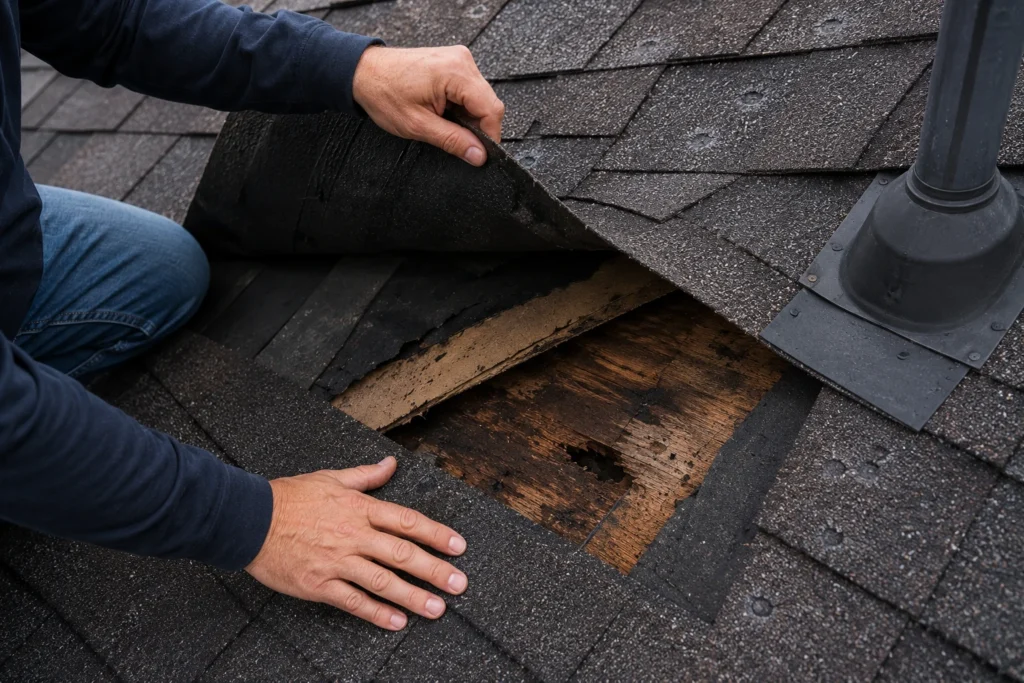
One reason claim outcomes differ is because not all damage is obvious. Some forms of hail damage remain hidden beneath roofing materials or within structural assemblies.
Examples include:
| Hidden Damage | Why It Matters |
| Bruised Shingles | Reduces roof lifespan |
| Damaged Underlayment | Increases leak risk |
| Bent Flashing | Allows moisture intrusion |
| Ventilation Damage | Affects roof performance |
| Fastener Damage | Weakens system integrity |
These conditions can lead to future problems if they are not identified and addressed.
Why Claim Outcomes Can Differ
Many property owners compare their claim experience with neighbors. One homeowner receives a full roof replacement. Another receives a repair estimate. Both homes appear similar. What happened? The answer often comes down to documentation, inspection quality, and claim presentation.
Inspection Thoroughness
The depth of an inspection matters. A quick visual review may identify obvious damage. A comprehensive inspection may identify additional components requiring repair or replacement. The difference can significantly impact claim value.
Quality of Documentation
Documentation is often the deciding factor in claim disputes. The strongest claims are supported by evidence.
That evidence may include:
- Photographs
- Measurements
- Contractor reports
- Weather records
- Material specifications
- Building code references
Well-documented claims typically provide a stronger foundation for negotiations.
Building Code Requirements
Building codes change over time. A roof installed fifteen years ago may not comply with current standards. When repairs trigger code requirements, additional work may become necessary. Those costs can materially affect claim values.
Situations Where an Insurance Adjuster Alone May Be Enough
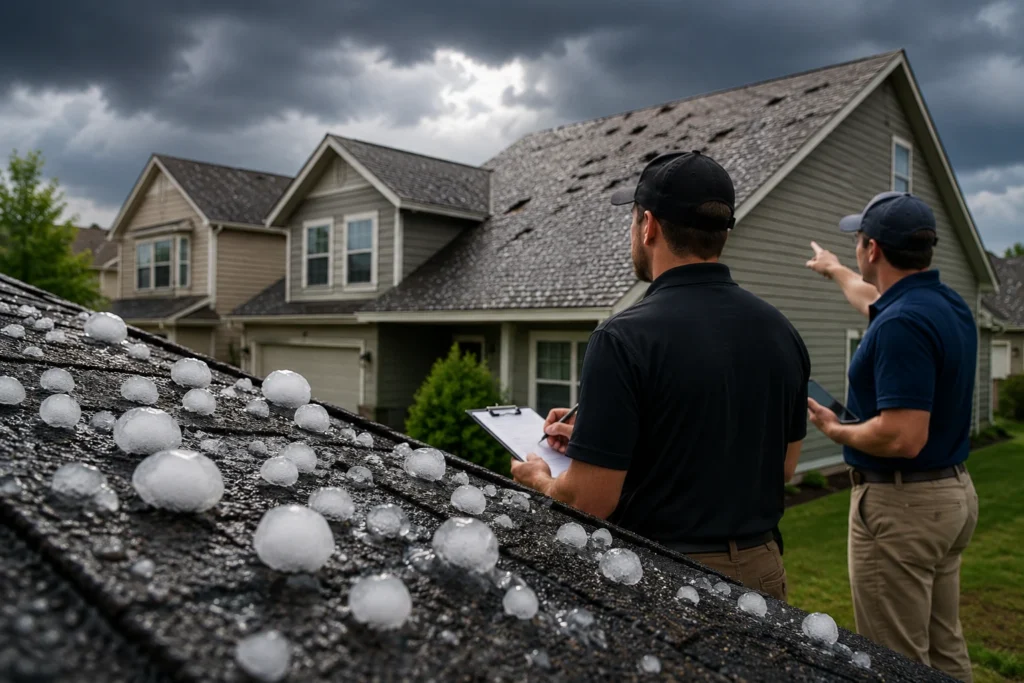
Not every claim requires additional representation. Some hail claims are relatively straightforward.
Examples include:
Minor Cosmetic Damage
Small dents on gutters or limited surface impacts may not involve significant disputes.
Clear Coverage Situations
When both the carrier and property owner agree on the scope of damage, claims often move efficiently.
Low-Dollar Claims
Smaller repair projects may not justify the additional expense associated with outside representation. The key is evaluating complexity. Simple claims often remain simple. Complex claims rarely do.
Situations Where a Public Adjuster May Provide Significant Value
There are circumstances where additional representation may offer meaningful benefits.
Large Roof Replacement Claims
Roof replacements often involve substantial costs. Missing components, incorrect measurements, or omitted materials can create large differences between repair costs and settlement offers.
Denied Claims
Claim denials do not necessarily end the conversation. Additional evidence may support reconsideration.
Examples include:
- Weather data
- Contractor inspections
- Engineering reports
- Additional photographs
A denial should always be reviewed carefully before accepting it as final.
Underpaid Claims
Underpayments can occur when repair scopes fail to capture all damaged components.
Common examples include:
- Missing flashing
- Omitted ridge materials
- Incorrect waste calculations
- Underestimated labor costs
Even small omissions can add up quickly.
Commercial Property Claims
Commercial claims often involve:
- Large roofing systems
- Specialized materials
- Tenant improvements
- Business interruption considerations
The larger the property, the greater the potential financial impact of missed damage.
Hail Damage Claim Supplements
Many homeowners assume the first estimate is the final estimate. That is not always the case. In many situations, Hail Damage Claim Supplements become necessary when additional damage is discovered after the initial inspection or when repair requirements evolve during the restoration process.
For example:
- Hidden damage may be uncovered during tear-off.
- Building code requirements may become apparent.
- Additional materials may be needed.
- Measurements may require correction.
Proper supplements help ensure that all covered storm-related damage is considered during claim evaluation. Supplements are not unusual. They are often a normal part of large hail claims.
A Real-World Claim Scenario
Imagine two property owners in Cameron experiencing the same hailstorm. Both homes have similar roofs. Both report claims. The first homeowner relies solely on the initial inspection. The second homeowner obtains additional documentation from roofing professionals and carefully reviews the estimate.
The second claim identifies:
- Additional flashing damage
- Damaged ventilation components
- Code-required upgrades
- Additional labor requirements
As a result, the final repair scope differs substantially. The lesson is simple. The quality of information presented often influences the quality of the claim outcome.
Common Mistakes Homeowners Make After a Hailstorm
Many claim challenges can be traced back to preventable mistakes.
Waiting Too Long to Document Damage
Time is not your friend after a storm. Weather conditions change. Repairs begin. Evidence disappears. Document damage as soon as it is safe to do so.
Taking Too Few Photographs
More photos are usually better.
Capture:
- Wide-angle views
- Close-up impacts
- Multiple elevations
- Interior damage
- Damaged personal property
You can always choose not to use a photo later. You cannot recreate evidence that was never captured.
Throwing Away Damaged Materials
Whenever practical, preserve damaged items.
Examples include:
- Shingles
- Flashing
- Vent covers
- Broken components
Physical evidence can sometimes strengthen claim discussions.
Accepting the First Estimate Without Review
Initial estimates are important. However, they should still be reviewed carefully.
Property owners should verify:
- Measurements
- Materials
- Scope of work
- Code-related items
Questions are not a problem. Unanswered questions can become one.
Questions to Ask Before Accepting a Settlement Offer
Before agreeing to any settlement, property owners should understand exactly what is included.
Ask questions such as:
- Does this estimate include all damaged areas?
- Are building code requirements addressed?
- Were all structures inspected?
- Does the estimate include waste factors?
- What happens if additional damage is discovered later?
A few questions today may prevent major frustrations tomorrow.
Cost Considerations
One of the most common discussions surrounding Public Adjuster vs. Insurance Adjuster for Hail Claims in Cameron, TX involves cost.
How Insurance Adjusters Are Paid
Insurance adjusters are compensated by insurance companies. Property owners generally do not pay additional fees for carrier inspections.
How Public Adjusters Are Paid
Public adjusters commonly work on contingency-based agreements. Compensation is generally tied to claim recovery. Property owners should always review contracts carefully and understand fee structures before signing.
Evaluating Cost Versus Potential Recovery
The goal is not simply minimizing expenses. The goal is maximizing value. For some claims, additional representation may provide little benefit. For others, it may help uncover overlooked damages that significantly affect recovery. Every claim deserves individual evaluation.
How to Choose the Right Public Adjuster in Cameron, TX
If you decide additional representation may be appropriate, selecting the right professional becomes important.
Verify Licensing
Always confirm licensing status.
exas regulates public adjusters, and proper licensing should never be optional.
Ask About Storm Claim Experience
Experience matters.
Ask questions such as:
- How many hail claims have you handled?
- Have you worked with similar properties?
- What documentation methods do you use?
Specific experience often leads to better claim management.
Research Reputation
Look beyond marketing materials.
Review:
- Testimonials
- Online reviews
- Professional affiliations
- References
Consistency matters.
Understand the Agreement
Never sign a contract you do not fully understand.
Review:
- Fee structures
- Cancellation provisions
- Scope of services
- Communication expectations
Transparency benefits everyone involved.
Protecting Your Claim From Day One
Regardless of whether you work with a public adjuster, an insurance adjuster, or both, there are steps every property owner should take.
Document Everything
Create a claim file.
Include:
- Photos
- Estimates
- Receipts
- Emails
- Inspection reports
Organization can dramatically improve claim management.
Keep Records of Temporary Repairs
Emergency mitigation may be necessary.
Save receipts for:
- Tarp installation
- Water extraction
- Temporary repairs
- Protective measures
These costs may be relevant during claim evaluation.
Maintain Communication Logs
Track:
- Dates
- Phone calls
- Emails
- Inspection appointments
Detailed records help avoid confusion later.
Obtain Additional Opinions When Necessary
If significant questions arise regarding damage scope, additional inspections may provide valuable information. A second opinion can help clarify complex situations.
Final Thoughts
When comparing Public Adjuster vs. Insurance Adjuster for Hail Claims in Cameron, TX, there is no universal winner. The better choice depends on the claim. Insurance adjusters play an essential role in evaluating losses and helping carriers process claims after storms. Public adjusters serve a different purpose. They represent policyholders and assist with inspections, documentation, negotiations, and claim management. For some homeowners, the insurance company’s inspection may provide everything needed to move forward.
For others particularly those dealing with denied claims, underpaid settlements, complex roof replacements, commercial losses, or disputed damage additional representation may offer substantial value. The most important step is understanding your options. Knowledge creates leverage. Preparation creates confidence. And when hail damage affects your property, both can make a meaningful difference in the outcome of your claim. Ultimately, the discussion surrounding Public Adjuster vs. Insurance Adjuster for Hail Claims in Cameron, TX is not about choosing sides. It is about choosing the level of support that best matches your situation, your property, and the complexity of your claim.
FAQs
An insurance adjuster works for the insurance company, while a public adjuster represents the policyholder’s interests.
No. Some straightforward claims can be resolved without additional representation, while more complex claims may benefit from a public adjuster.
Yes. A public adjuster can review the denial, gather additional evidence, and help present supporting documentation.
Most public adjusters work on a contingency fee basis, meaning they are paid a percentage of the claim recovery.
Hidden roof damage, flashing issues, underlayment damage, ventilation components, and code-related upgrades are sometimes missed.
Yes. Many property owners hire public adjusters after the claim process has already started.
Supplements are additional requests for compensation when new damage, missing items, or additional repair costs are identified after the initial estimate.
You should inspect and document damage as soon as it is safe to do so to preserve evidence and support your claim.
Yes. Public adjusters often assist with commercial claims involving large losses, multiple structures, and complex damage assessments.
Review the estimate carefully, confirm all damage is included, and ask questions if any repairs or costs appear to be missing.