
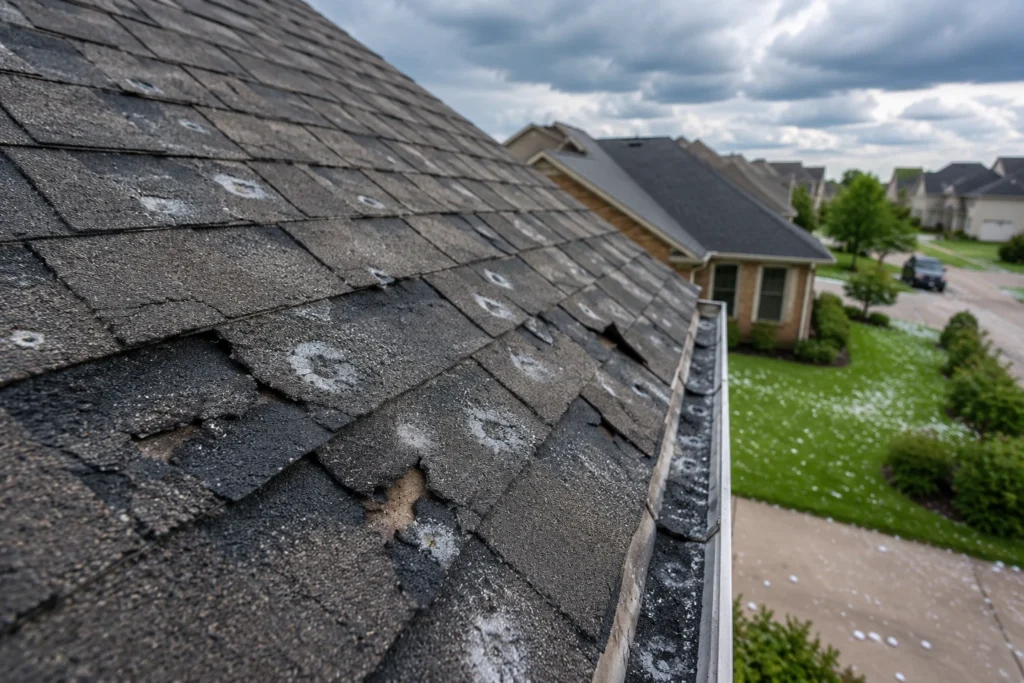
A hailstorm can damage a roof in a matter of minutes, but the insurance claim process can drag on for weeks or even months. If you’re searching for what to do if your hail claim was denied in Cameron, TX, you’re likely dealing with frustration, uncertainty, and a growing list of questions. You paid for insurance coverage. You reported the damage. You followed the process. Then the denial letter arrived. It’s discouraging. But a denied hail claim does not automatically mean your case is over.
Many homeowners throughout Texas successfully challenge denied claims after obtaining additional evidence, requesting reinspections, or uncovering damage that was missed during the original evaluation. The key is knowing what steps to take next and avoiding costly mistakes that could weaken your position. Whether your property suffered roof damage, gutter impacts, siding damage, HVAC damage, or interior water intrusion following a hailstorm, there are practical actions you can take to pursue a fair outcome. Let’s start by understanding what a denial actually means.
Understanding What a Hail Claim Denial Actually Means
Many homeowners assume a denial means the insurance company has permanently closed the file. Not necessarily. A denial simply means the insurance carrier currently believes the available evidence does not support payment under the terms of the policy. Sometimes the decision is justified. Other times, it results from incomplete inspections, disputed findings, missing documentation, or differing opinions about the cause of damage.
Full Denial vs. Partial Denial
Not all denials look the same. Some claims are completely rejected. Others are partially denied. A partial denial occurs when the insurance company agrees that some damage exists but refuses to cover certain components of the repair.
For example:
| Type of Claim Decision | Meaning |
| Full Denial | No payment is issued |
| Partial Denial | Some damage covered, other damage rejected |
| Underpayment | Damage approved but repair costs undervalued |
Understanding which category applies to your claim helps determine the most effective response.
Denial Versus Underpayment
Homeowners often focus entirely on denial letters. However, underpayments can create similar financial challenges. An insurance company may acknowledge hail damage but provide a settlement that falls thousands of dollars short of actual repair costs. In practical terms, the result is often the same. The property remains unrepaired. The homeowner absorbs the difference. That is why every claim decision deserves careful review.
Why Hail Claims Get Denied in Texas
Understanding why claims are denied helps homeowners build a stronger response.
The Insurance Company Says the Damage Is Wear and Tear
This is one of the most common reasons for denial.
The carrier may argue that roofing materials deteriorated because of:
- Age
- Sun exposure
- Weathering
- Poor maintenance
- Material defects
When this argument is used, the insurer is essentially saying the roof’s condition resulted from gradual deterioration rather than sudden hail impact.
The Adjuster Finds No Functional Damage
Many hail disputes center on the distinction between cosmetic and functional damage. Functional damage affects performance.
Examples include:
- Fractured shingles
- Punctures
- Cracked roofing materials
- Damaged flashing
- Water intrusion
Cosmetic damage affects appearance without necessarily impairing performance. This distinction often becomes a major source of disagreement. One inspector may identify substantial storm damage. Another may conclude the impacts are purely cosmetic.
Late Claim Reporting
Timing matters. The longer homeowners wait to report hail damage, the more opportunities insurance companies have to question the claim.
Common arguments include:
- Damage occurred after the reported storm
- Evidence deteriorated over time
- Other weather events caused the damage
- Maintenance issues developed later
Prompt reporting helps eliminate many of these concerns.
Insufficient Documentation
A surprising number of denied claims suffer from weak documentation.
Examples include:
- Limited photographs
- No contractor reports
- Incomplete estimates
- Missing weather verification
- Poor recordkeeping
Insurance claims are evidence-driven. The stronger the evidence, the stronger the claim.
Pre-Existing Damage Allegations
Insurance companies sometimes argue that roof damage existed before the storm occurred.
They may reference:
- Prior claims
- Historical inspections
- Satellite imagery
- Previous repair records
Whether these conclusions are accurate or not, homeowners need evidence to challenge them effectively.
Policy Exclusions
Some denials are based on policy language rather than the damage itself.
Potential limitations include:
- Wind and hail exclusions
- Roof payment schedules
- Actual cash value endorsements
- Specific coverage limitations
- Deductible requirements
Understanding policy language is essential before challenging a denial.
The First Thing You Should Do After Receiving a Denial Letter
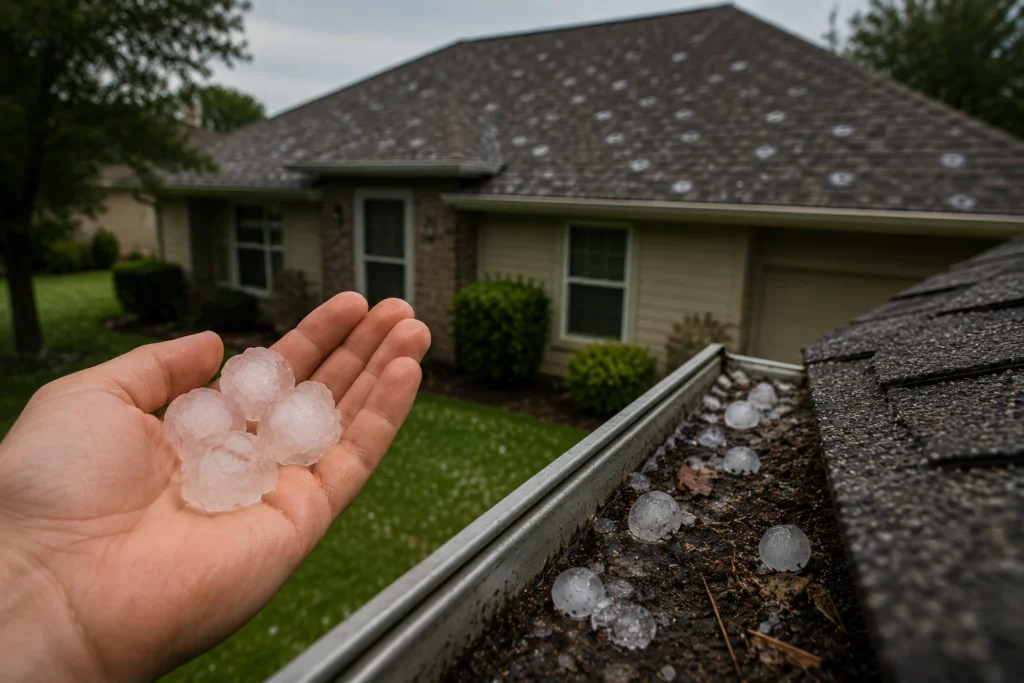
Receiving a denial can feel personal. It isn’t. Treat it as a business issue. Then get organized.
Read the Entire Denial Letter
Many homeowners skim denial letters and focus only on the final decision. That is a mistake.
Pay close attention to:
- The stated reason for denial
- Inspection findings
- Dates referenced
- Policy provisions cited
- Supporting explanations
The details matter.
Request Supporting Documentation
You should understand exactly how the insurance company reached its conclusion.
Request copies of:
- Inspection reports
- Adjuster notes
- Photographs
- Engineering reports
- Claim evaluations
These documents often reveal missing information or assumptions that can later be challenged.
Create a Claim File
Organization wins disputes.
Create a dedicated file containing:
- Insurance policy documents
- Inspection reports
- Contractor estimates
- Photographs
- Emails
- Claim notes
- Weather reports
The more organized your documentation becomes, the easier it will be to challenge inaccuracies.
Review Your Insurance Policy Carefully
Most homeowners do not read their insurance policies until a problem develops. That is completely understandable. However, once a denial occurs, the policy becomes one of the most important documents in the entire claim.
Key Sections to Review
Focus on:
- Coverage provisions
- Exclusions
- Conditions
- Deductibles
- Settlement language
Pay special attention to sections discussing hail and wind damage.
Understanding Hail Deductibles
Many Texas homeowners carry separate hail deductibles. These deductibles are often calculated as percentages rather than fixed amounts.
For example:
| Home Value | 2% Hail Deductible |
| $250,000 | $5,000 |
| $400,000 | $8,000 |
| $600,000 | $12,000 |
The numbers can be significant. Many homeowners don’t fully understand their deductible until after a claim occurs.
Written Policy Language Controls
Phone conversations can be helpful. Emails can provide clarification. However, the written policy ultimately governs the claim. When disputes arise, the contract matters more than verbal statements. Always verify coverage questions by reviewing the actual policy language.
How to Document Hail Damage for an Insurance Claim
One of the most important questions homeowners should ask after a denial is how to strengthen the evidence supporting their position. In fact, understanding How to Document Hail Damage for an Insurance Claim can significantly improve the chances of successfully challenging an insurance company’s decision. Detailed photographs, contractor reports, weather records, repair estimates, and organized communication logs create a stronger foundation for reinspections, supplements, and claim negotiations.
Photograph the Entire Property
Do not focus exclusively on the roof. Document everything.
This includes:
- Roof surfaces
- Gutters
- Downspouts
- Siding
- Window screens
- HVAC equipment
- Fences
- Outdoor structures
Wide-angle photographs establish context. Close-up photographs capture details. Both are important.
Capture Functional Damage
Look for signs such as:
- Granule loss
- Shingle bruising
- Cracked tiles
- Dented metal surfaces
- Exposed substrate
- Damaged vents
Every photograph should clearly identify location and condition.
Obtain Weather Verification
Weather data can become powerful evidence.
Useful sources include:
- National Weather Service reports
- Hail maps
- Storm tracking services
- Local weather archives
The goal is to establish that a hail-producing event occurred near the property.
Document Interior Damage
Many homeowners overlook interior evidence. Don’t.
Examples include:
- Ceiling stains
- Wet insulation
- Attic leaks
- Water intrusion
- Mold development
Interior damage often helps establish a connection between roof damage and actual loss.
Build a Complete Evidence Package
The strongest claim disputes rely on multiple forms of documentation.
Examples include:
- Inspection reports
- Photographs
- Weather records
- Contractor estimates
- Repair invoices
- Claim correspondence
Together, these items create a compelling picture of the loss.
Getting an Independent Roof Inspection
One inspection should never be viewed as the final word. Especially after a denial.
Why a Second Opinion Matters
Insurance adjusters perform an important role. But they are not infallible. Different inspectors frequently identify different conditions.
Independent inspections often uncover:
- Missed hail impacts
- Additional damaged slopes
- Hidden deterioration
- Code compliance concerns
- Material matching issues
That additional information can become critical during a dispute.
What a Thorough Inspection Should Include
A quality inspection generally involves:
- Roof evaluation
- Test square analysis
- Detailed photographs
- Damage mapping
- Written findings
- Repair recommendations
The more comprehensive the inspection, the more useful it becomes during negotiations.
Warning Signs of an Incomplete Inspection
Be cautious if the original inspection involved:
- Very little roof access
- Short inspection times
- No attic review
- No collateral damage assessment
- Limited photographic documentation
Sometimes important damage gets overlooked simply because enough time was not spent evaluating the property.
When that happens, the denial may not accurately reflect the true condition of the roof.
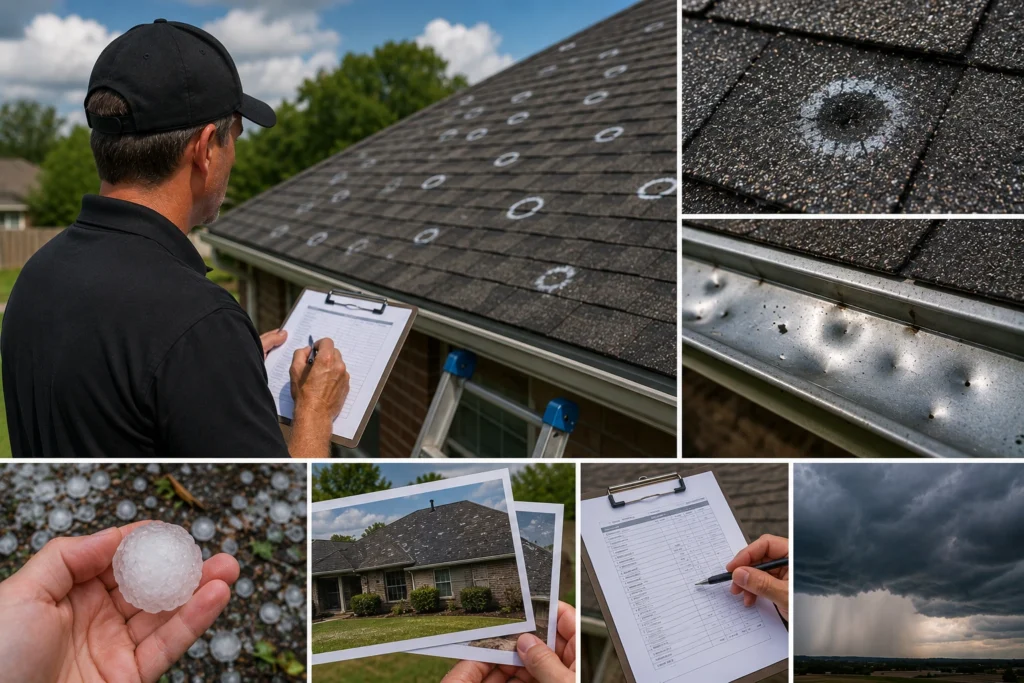
Common Insurance Company Arguments and How to Respond If you’re researching what to do if your hail claim was denied in Cameron, TX, you’ll quickly notice that many denial letters rely on similar explanations. Understanding these arguments can help you prepare an effective response.
“The Damage Is Cosmetic”
This is one of the most common reasons insurers deny or limit hail claims. The company may acknowledge hail impacts but argue that the damage affects appearance rather than performance.
When responding to this argument:
- Request detailed inspection findings.
- Obtain an independent roofing evaluation.
- Ask inspectors to identify functional concerns.
- Document fractures, punctures, and compromised roofing materials.
The objective is to determine whether the hail impacts affect the roof’s ability to perform its intended function.
“The Damage Existed Before the Storm”
Insurance companies sometimes claim that damage predates the reported hail event.
To challenge this position:
- Gather weather reports from the storm date.
- Obtain previous inspection records if available.
- Document the property’s condition before the storm.
- Request professional opinions regarding impact characteristics.
The more evidence linking damage to a specific storm event, the stronger your position becomes.
“The Roof Is Too Old”
A roof’s age does not automatically eliminate coverage. Older roofs can still sustain covered hail damage. The key issue is not age. The key issue is causation. If hail created direct physical damage, age alone does not necessarily prevent coverage.
“Repairs Don’t Exceed the Deductible”
This argument often depends on estimate accuracy. If the insurance company’s scope of repairs is incomplete, the deductible calculation may also be inaccurate.
Review:
- Material quantities
- Labor pricing
- Building code requirements
- Disposal expenses
- Roofing accessories
- Ancillary repairs
Even seemingly small omissions can significantly affect the final estimate.
How the Reinspection Process Works
Many denied claims are challenged through reinspections. A second look can make a difference.
Requesting a Reinspection
Reinspections are most effective when supported by new evidence.
Examples include:
- Independent inspection reports
- Additional photographs
- Updated repair estimates
- Engineering opinions
- Weather verification reports
Submitting new information gives the insurance company a reason to revisit its original conclusions.
Preparing for the Reinspection
Preparation matters.
Before the inspection:
- Organize documentation.
- Print photographs.
- Prepare contractor reports.
- Assemble weather data.
- Create a damage summary.
Many homeowners also arrange for their roofing contractor or public adjuster to attend. Having knowledgeable professionals present can help ensure important findings are discussed.
Mistakes to Avoid
Common mistakes include:
- Missing inspection appointments
- Failing to provide evidence
- Assuming the adjuster has reviewed all documentation
- Becoming confrontational
Professionalism and preparation often produce better outcomes than frustration.
Hail Damage Claim Supplements: What Carriers Miss in Their Scope
A surprising number of denied or underpaid claims stem from incomplete scopes of damage. The original estimate simply misses important repair items.
Why Initial Estimates Are Sometimes Incomplete
Roof systems involve many interconnected components.
Inspectors may overlook:
- Flashing
- Underlayment
- Ridge materials
- Ventilation components
- Starter strips
- Code-required upgrades
These items can substantially increase repair costs.
Commonly Missed Items
| Frequently Overlooked Component | Why It Matters |
| Flashing | Prevents water intrusion |
| Underlayment | Secondary moisture protection |
| Ridge Components | Supports roof system integrity |
| Ventilation Elements | Maintains proper airflow |
| Code Upgrades | Required for compliance |
How Supplements Help
Supplements provide additional documentation supporting revised repair costs. Instead of relying on opinions, supplements rely on facts. That distinction matters.
Well-supported supplements often result in:
- Additional payments
- Expanded repair scopes
- Reopened claims
- Revised estimates
When to Hire a Public Adjuster
Not every denied claim requires professional representation. Some do. Knowing when to seek help is important.
Signs You May Need Assistance
Consider professional help when:
- Your claim has been denied.
- Significant damage exists.
- Multiple inspections disagree.
- Settlement offers appear inadequate.
- Communication has stalled.
- Coverage questions become complicated.
The larger the financial exposure, the more valuable expert assistance often becomes.
How Public Adjusters Help
Public adjusters represent policyholders.
Their services may include:
- Reviewing insurance policies
- Documenting damage
- Preparing estimates
- Coordinating inspections
- Managing claim documentation
- Negotiating settlements
Their objective is to advocate for the homeowner rather than the insurance company.
Public Adjuster vs. Insurance Adjuster
Many homeowners confuse these roles. They are very different.
| Public Adjuster | Insurance Adjuster |
| Represents policyholder | Represents insurance company |
| Advocates for homeowner | Handles claim for insurer |
| Reviews damages independently | Reviews damages for carrier |
| Negotiates on owner’s behalf | Evaluates claim for company |
Understanding this distinction can help homeowners make informed decisions.
Texas Insurance Rules That May Affect Your Claim
Texas homeowners have important rights throughout the claims process. Understanding those rights can help strengthen a dispute.
Claim Handling Responsibilities
Insurance companies generally must:
- Acknowledge claims
- Investigate reported losses
- Review submitted information
- Communicate decisions
Keeping detailed records of every interaction helps establish a timeline.
Your Right to Information
Homeowners may request claim-related information, including:
- Inspection findings
- Photographs
- Reports
- Explanations for claim decisions
The more information available, the easier it becomes to evaluate a denial.
Filing a Complaint
In some situations, homeowners choose to file complaints with regulatory authorities. This should not replace documentation. Instead, it may become one component of a broader strategy when disputes remain unresolved.
When Legal Action May Become Necessary
Most hail claim disputes never reach litigation. Many are resolved through documentation, negotiations, reinspections, and supplements. Some disputes, however, become more complex.
Situations That May Escalate
Examples include:
- Repeated denials despite substantial evidence
- Significant financial losses
- Serious coverage disagreements
- Allegations involving claim handling practices
When these circumstances arise, legal consultation may be appropriate.
Why Documentation Remains Essential
Whether you’re negotiating, supplementing, filing complaints, or consulting legal counsel, documentation remains the foundation. Without evidence, strong arguments become difficult to prove. With evidence, the conversation changes. In many ways, insurance claim disputes revolve around evidence and the process of determining what information can be trusted. This concept is somewhat similar to epistemology, a branch of philosophy that examines how knowledge is established, evaluated, and justified. While homeowners do not need a philosophy degree to challenge a denied hail claim, understanding that decisions are ultimately driven by evidence rather than assumptions can help guide a more effective claim strategy.
Real-World Example: Reopening a Denied Hail Claim
Consider a hypothetical example. A homeowner experiences a severe hailstorm and files a claim. The insurance company inspects the roof and issues a denial, concluding that the observed damage resulted from age-related deterioration rather than hail. The homeowner disagrees. An independent inspection is obtained.
The second inspection identifies:
- Functional shingle fractures
- Consistent hail impact patterns
- Damaged metal roof components
- Additional collateral damage
The homeowner also gathers:
- Weather reports
- Additional photographs
- Detailed repair estimates
A reinspection is requested. The new evidence is reviewed. Additional damage is acknowledged. The claim is reopened and the settlement is revised. While every situation is different, this example demonstrates an important principle. Denials are not always final. Evidence can change outcomes.
Preventing Future Hail Claim Problems
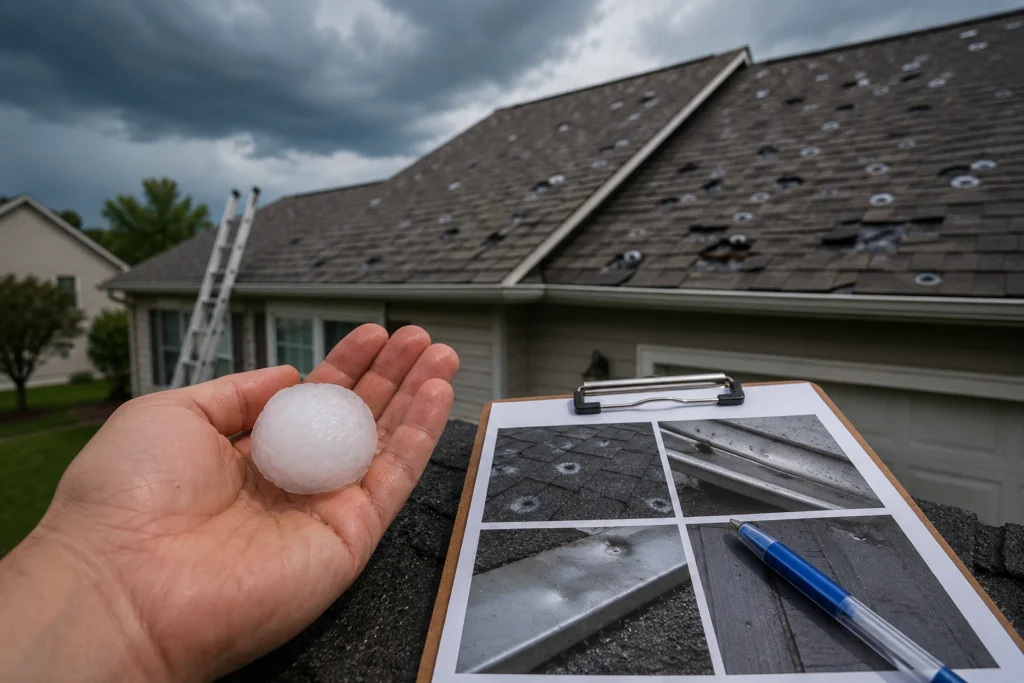
Even after resolving a dispute, homeowners can take steps to strengthen future claims.
Conduct Routine Roof Inspections
Regular inspections establish a property history. That history may become valuable evidence after future storms.
Maintain Detailed Records
Keep copies of:
- Roof replacements
- Repairs
- Inspection reports
- Contractor invoices
- Maintenance records
Years later, these documents may prove extremely valuable.
Preserve Storm Documentation
When severe weather occurs:
- Photograph conditions.
- Save weather reports.
- Record dates.
- Document observations.
Prompt documentation often becomes the strongest documentation.
Review Coverage Annually
Insurance policies change. Coverage options evolve.
Annual reviews help homeowners understand:
- Deductibles
- Endorsements
- Exclusions
- Coverage limits
Understanding your policy before a loss occurs can prevent surprises later.
Act Quickly After Storms
Time rarely helps evidence. Rain washes away indicators. Repairs alter conditions. Weather continues. Prompt inspections and thorough documentation remain some of the most effective ways to protect your interests.
Why Cameron Homeowners Should Take Denials Seriously
Hailstorms are a reality across Texas. Unfortunately, claim disputes are as well. For homeowners researching what to do if your hail claim was denied in Cameron, TX, the most important takeaway is simple: A denial letter is not necessarily the final answer. Insurance companies make decisions based on available information. If that information is incomplete, disputed, or inaccurate, additional evidence may justify a different outcome.
That is why successful claim challenges often focus on:
- Strong documentation
- Independent inspections
- Weather verification
- Detailed estimates
- Organized communication
- Professional representation when appropriate
The homeowners who achieve the best results are rarely the ones who argue the loudest. They are usually the ones with the strongest evidence.
Conclusion
Receiving a denial after a hailstorm can feel discouraging. You pay premiums. You experience damage. You report the loss. Then you receive a letter saying the claim has been denied. It’s frustrating. But it doesn’t have to be the end of the process. If you’re trying to determine what to do if your hail claim was denied in Cameron, TX, start with the fundamentals. Review the denial carefully. Understand the policy language. Gather documentation. Obtain an independent inspection. Request supporting reports. Consider a reinspection. Evaluate supplements. Seek professional assistance when necessary.
Most importantly, stay organized. Insurance claim disputes are rarely resolved through assumptions or opinions. They are resolved through evidence. The stronger your documentation, the stronger your position becomes. Whether your dispute involves roof damage, siding impacts, gutter dents, HVAC damage, interior leaks, or a combination of losses, a methodical and evidence-based approach can significantly improve your chances of obtaining a fair outcome. A hailstorm may last only a few minutes. The claim process can last much longer. Being prepared for that process can make all the difference.
FAQs
Yes. Many denied claims can be reopened if new evidence, inspections, or documentation become available.
The timeframe depends on your policy and circumstances, so it’s best to act as quickly as possible after receiving the denial.
You can obtain an independent inspection to determine whether the damage was caused by hail rather than normal aging.
In many cases, yes. A second inspection may uncover damage that was missed during the original evaluation.
Yes. A public adjuster can review the claim, document damage, and negotiate with the insurance company on your behalf.
Photographs, inspection reports, repair estimates, weather records, and claim correspondence are often the most valuable forms of evidence.
Roof age alone does not prevent coverage if the hail caused direct physical damage to the roofing system.
Yes. You can challenge portions of a claim decision if you believe repairs were overlooked or undervalued.
Review the denial carefully, request supporting documentation, and organize all claim-related records before responding.
Yes. Storm reports, hail maps, and weather records can help establish that a damaging hail event occurred near your property.